Travelling internationally with young children is a profoundly rewarding milestone, yet navigating the delicate biological clock of a toddler across borders presents one of parenting's greatest logistical hurdles. For thousands of British families departing regional UK airports—such as London Gatwick, Manchester, Stansted, and Birmingham—late-afternoon and evening departures to Antalya are exceedingly common. While these red-eye and late-night flight slots often offer attractive fare savings and convenient departure times after the working day, they land on the Mediterranean coast between midnight and three in the morning local time. Factoring in the two-to-three-hour time difference between the United Kingdom and Turkey, a toddler's circadian rhythm is pushed to its absolute limit. Preserving that fragile sleep state during the critical window between the aircraft cabin and the resort cot is the single most vital factor in preventing a multi-day holiday sleep regression.
The Fragile Circadian Rhythm of the Travelling Toddler
Young children thrive on predictability, spatial familiarity, and established evening sleep routines. A typical bedtime sequence involves a warm bath, familiar pyjamas, a soothing bedtime story, and a low-sensory environment that triggers melatonin production. International aviation systematically shatters this architecture. During an evening flight, children are exposed to fluctuating cabin pressures, the hum of jet engines, repetitive public address announcements, and artificial cabin lighting. While some toddlers successfully drift off in an aircraft seat, their sleep remains light, restless, and easily fragmented.
The true crisis point occurs upon touchdown at Antalya Airport. Suddenly, a sleeping or semi-conscious child must be unbuckled, carried down the mobile steps or jet bridge into a bright, echoey customs hall, and wheeled through passport control. For a tired toddler whose nervous system is operating on sleep debt, the bright terminal lighting, passport inspection queues, and temperature change act as an intense sensory shock. If the onward journey from the terminal to the hotel involves chaotic queues, noisy vehicles, and uncalibrated temperatures, the child's cortisol levels spike. A toddler who reaches full overtiredness will enter a state of sensory overload, resulting in prolonged crying, refusal to sleep upon reaching the hotel room, and erratic night waking that can derail the first three days of your family holiday.
The Operational Breakdown of Shared Coaches at Midnight
Many British parents who book full package holidays rely on the operator-provided communal coach transfer, assuming it provides a simple solution for late arrivals. However, analyzing a shared coach journey through the strict lens of pediatric sleep management reveals catastrophic structural deficiencies. Upon exiting the terminal into the midnight air, parents carrying a sleeping child and pushing a pushchair must locate their tour operator representative and hike across expansive airport car parks to an allocated coach bay.
Communal holiday coaches do not depart immediately. They operate on a high-volume aggregation model, meaning arriving families are forced to sit on a stationary coach for up to an hour while waiting for passengers from delayed European flights to clear luggage collection. The coach interior is brightly lit, noisy with the chatter of dozens of holidaymakers, and intermittently interrupted by luggage compartment doors slamming shut. Once the journey finally begins, the coach navigates a convoluted multi-drop route. Stopping repeatedly at six or seven different resorts in Belek, Side, or Lara—with internal cabin lights flashing on at every stop and air brakes hissing—repeatedly wakes the child. A transfer that should take thirty minutes stretches into an exhausting two-hour ordeal, ensuring your child arrives at the resort in an agitated, distressed state.
The Mechanical Hazards of Spontaneous Airport Cabs
Attempting to bypass the communal coach by approaching the spontaneous yellow taxi ranks outside the terminal presents equally severe complications for young families. Municipal taxis waiting in open ranks are almost universally lightweight saloon cars designed for basic city commuting. These vehicles rarely carry dedicated child safety restraints in their boots due to limited luggage capacity. If an infant seat is somehow available, it is often a universal booster cushion completely unsuited for a sleeping two-year-old, or a worn seat with frayed straps and questionable structural integrity.
Expecting an exhausted, limp toddler to travel on an adult's lap on high-speed coastal motorways is a major safety hazard that violates modern parental standards. Furthermore, standard saloon cars feature rudimentary suspension systems and minimal acoustic dampening. The harsh vibrations of the asphalt, road noise, and abrupt braking typical of urban taxis will continually startle a sleeping child awake. When compounded with variable taximeters that climb while idling and the physical impossibility of fitting three large suitcases, a pushchair, and a travel cot into a saloon boot, the kerbside taxi rank fails the midnight family test completely.
The Seamless Sanctuary of an Antalya VIP Transfer
Protecting your child's sleep schedule and ensuring family sanity demands a dedicated, zero-friction transit strategy. Pre-booking an executive antalya vip transfer completely transforms the midnight arrival, moving your child seamlessly from the aircraft cabin into a calm, mobile sleep sanctuary.
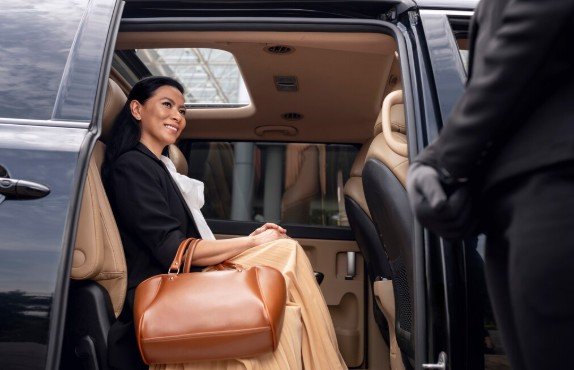
The operational framework is proactive and synchronized with your flight telemetry. A professional chauffeur monitors your flight in real-time, positioning an executive Mercedes-Benz minivan in the priority commercial bays immediately outside the terminal doors. The moment you clear the customs doors, your uniformed chauffeur greets you with a personalized name board, immediately assumes full responsibility for your heavy baggage and pushchair, and guides your family directly to the waiting vehicle. There are no queues, no administrative delays, and no loud crowds. Within five minutes of stepping onto the concourse, your family is securely ensconced within the vehicle, ready for a silent, direct trajectory to your resort.
Pre-Installed Certified Isofix Restraints: Sleep Ergonomics and Safety
The cornerstone of a successful midnight transfer with a toddler is the seating apparatus. Unlike spontaneous transport, a pre-arranged private service allows parents to specify the precise age, weight, and developmental stage of their child during the reservation process. Prior to the vehicle arriving at the terminal, the operations team professionally installs a certified, pristine child safety seat securely anchored directly into the vehicle's chassis using ISOFIX points.
For young toddlers, a high-grade group 1 or multi-stage ergonomic seat provides superior side-impact protection, deep lateral head support, and multi-position reclining capabilities. The recline feature is critical: by angling the child seat back into a restful, cradle position, the child's head is prevented from falling forward onto their chest during braking, maintaining an open airway and deep sleep posture. Parents can simply transfer their sleeping toddler directly from the pushchair or baby carrier straight into the padded, pre-adjusted five-point harness, buckle them securely in seconds, and allow the restorative sleep cycle to continue uninterrupted.
Acoustic Isolation and the Luxury of Cabin Silence
The interior architecture of a high-specification Mercedes-Benz Vito or V-Class minivan is engineered to deliver complete sensory isolation from the chaotic external environment. Standard commercial vehicles suffer from high cabin resonance, tire roar, and wind buffeting at sustained highway speeds. Elite private minivans undergo extensive aftermarket acoustic engineering, integrating thick sound-dampening insulation inside door panels, floor pans, and roof linings.
The moment the heavy sliding doors glide shut, the harsh noises of airport luggage tugs, idling buses, and motorway traffic are completely eradicated, replaced by a soothing, library-quiet interior calm. Combined with heavily tinted privacy glass that blocks out the aggressive glare of highway floodlights and streetlamps, the cabin becomes a darkened cocoon. Parents can dim the multi-zone ambient lighting to a soft, warm amber glow or turn it off entirely, simulating the tranquil darkness of a child's bedroom at home.
Microclimate Control and White Noise Engineering
Stepping from an air-conditioned aircraft cabin into the humid, warm Mediterranean night air can cause immediate physical discomfort and irritability for a sleeping child. Executive private minivans address this through advanced, multi-zone digital climate control systems that operate independently from the driver's front cabin. Chauffeurs ensure the passenger lounge is pre-cooled to an optimal sleeping temperature of twenty to twenty-one degrees Celsius before your flight touches down.
The gentle, continuous airflow of the ceiling-mounted climate vents generates a steady, soothing ambient hum that acts as natural white noise, masking road transitions and helping your toddler remain settled in deep REM sleep. Furthermore, modern executive fleets feature high-speed onboard Wi-Fi and Bluetooth-connected premium sound systems. Parents can pair their personal smartphones directly with the rear cabin speakers to play their child's familiar white noise track, lullabies, or rainfall sounds from home, maintaining sensory continuity across three thousand miles of travel.
The Chauffeur as a Gentle, Defensive Pilot
The human element behind the steering wheel plays an indispensable role in preserving a child's sleep. Driving along the D400 coastal corridor late at night requires a calm, matured, and highly defensive driving philosophy. Executive chauffeurs handling late-night family transits are seasoned professionals trained specifically in smooth driving dynamics. They operate under strict mandates that forbid harsh acceleration, abrupt braking, or sharp cornering.
By anticipating traffic light cycles, maintaining generous following distances, and taking highway curves with fluid momentum, the chauffeur ensures that the vehicle glides effortlessly over the asphalt. This floating sensation rocks the child gently, reinforcing their slumber rather than startling them awake with lateral g-forces. The chauffeur maintains complete professional discretion and silence, avoiding unnecessary conversation and allowing parents to rest their own exhausted eyes in the supportive leather captain's chairs.
Fluid Resort Arrival and Seamless Cot Transfer
The final phase of the midnight transit is the arrival at your resort lobby or private villa. A standard taxi driver will drop your bags on the kerb, leaving you to juggle a waking child, suitcases, and check-in procedures simultaneously. A premium chauffeur manages this transition with thoughtful precision. Upon pulling up to the hotel portico, the chauffeur coordinates quietly with the night concierge and porters, transferring your luggage directly to resort luggage trolleys without waking your child.
One parent can complete the swift night check-in formalities while the other carries the sleeping child directly from the vehicle's Isofix seat straight to the waiting hotel room. Because your child has experienced a continuous, peaceful sleep during the drive rather than a sensory meltdown on a tour bus, they can be transferred seamlessly into the hotel cot with minimal fuss. Your family wakes up the next morning refreshed, energized, and perfectly synchronized to enjoy your first sunny Mediterranean breakfast together, proving that investing in professional private transit is the smartest decision a parent can make for a peaceful family holiday.